

As boomer patient levels rise, a multi-generational approach to healthcare technology is critical

By Roberta Romeo
Nearly 70 million U.S. citizens are baby boomers, the youngest of whom are now reaching age 60 while another 10,000 are turning 65 by the day. By 2030, one in every five Americans will be of retirement age. This demographic shift is reshaping how healthcare systems, communities, and policymakers approach aging, wellness, and long-term care.
As a member of IMEG’s Healthcare Information Technology (HIT) team, my colleagues and I work with health systems to integrate new equipment and technology, optimize clinical and operational workflows, and advance strategies to promote healthier, more connected patient experiences that can be targeted to specific needs. In addition to boomers representing an ever-larger portion of the patient population, the healthcare workers who care for them also are aging, now averaging over 43, with many clinical roles trending even older.
The boomers and older caregivers are finding themselves navigating new and increasingly complex digital environments. To varying degrees, some embrace the AI-driven systems, mobile apps, and virtual care delivery, while others reject them outright. Meanwhile, younger patients and caregivers expect modern, seamless digital experiences and lose patience with outdated systems. Clinicians also find themselves frequently troubleshooting technology on the fly, becoming front-line IT support in addition to providing care.
Multi-generational lens
I see these dynamics daily. In my own family, for example, my aging parents prefer traditional, non-digital healthcare interactions. They view their medical appointments as “outings” to be enjoyed, where personal attention, familiarity, and being known by name matter as much as the clinical care itself (all while providers are “dinged” if they have low patient volumes). Meanwhile, younger adults easily understand the value and trustworthiness of emerging technologies, and children and teenagers see innovation as modern tools that make life easier or diminish effort.
Designing healthcare systems for the future means acknowledging these generational differences and creating environments that support every user, from those aging into higher-acuity care to the youngest patient or caregiver entering a healthcare facility.
Such future-ready design must meet people where they are—supporting tech-hesitant patients and staff in a way that is not off-putting and providing digital-native patients and clinicians with what they expect—all while building infrastructure that won’t limit tomorrow’s possibilities.
One of our current clients illustrates this point perfectly. Nearly half of their patients do not regularly use smartphones. However, the client and IMEG still needed to design their new hospital with advanced technologies in mind, such as a digital front door, smart wayfinding, geo-fencing for arrival, and a real-time location system (RTLS). All of this required thoughtful design and specific infrastructure and placement. Even though full adoption won’t happen right away, the foundations are in place for years to come. This is not future proofing, but rather future-innovating while simultaneously welcoming present realities.
Technology that works for people
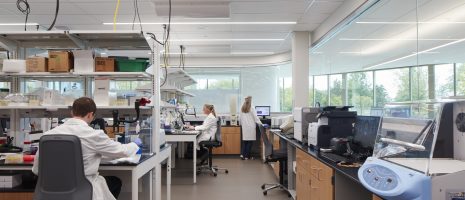
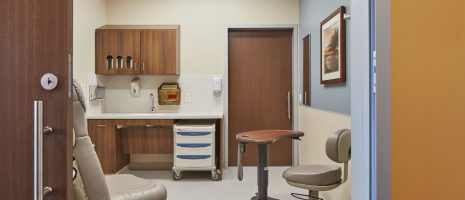
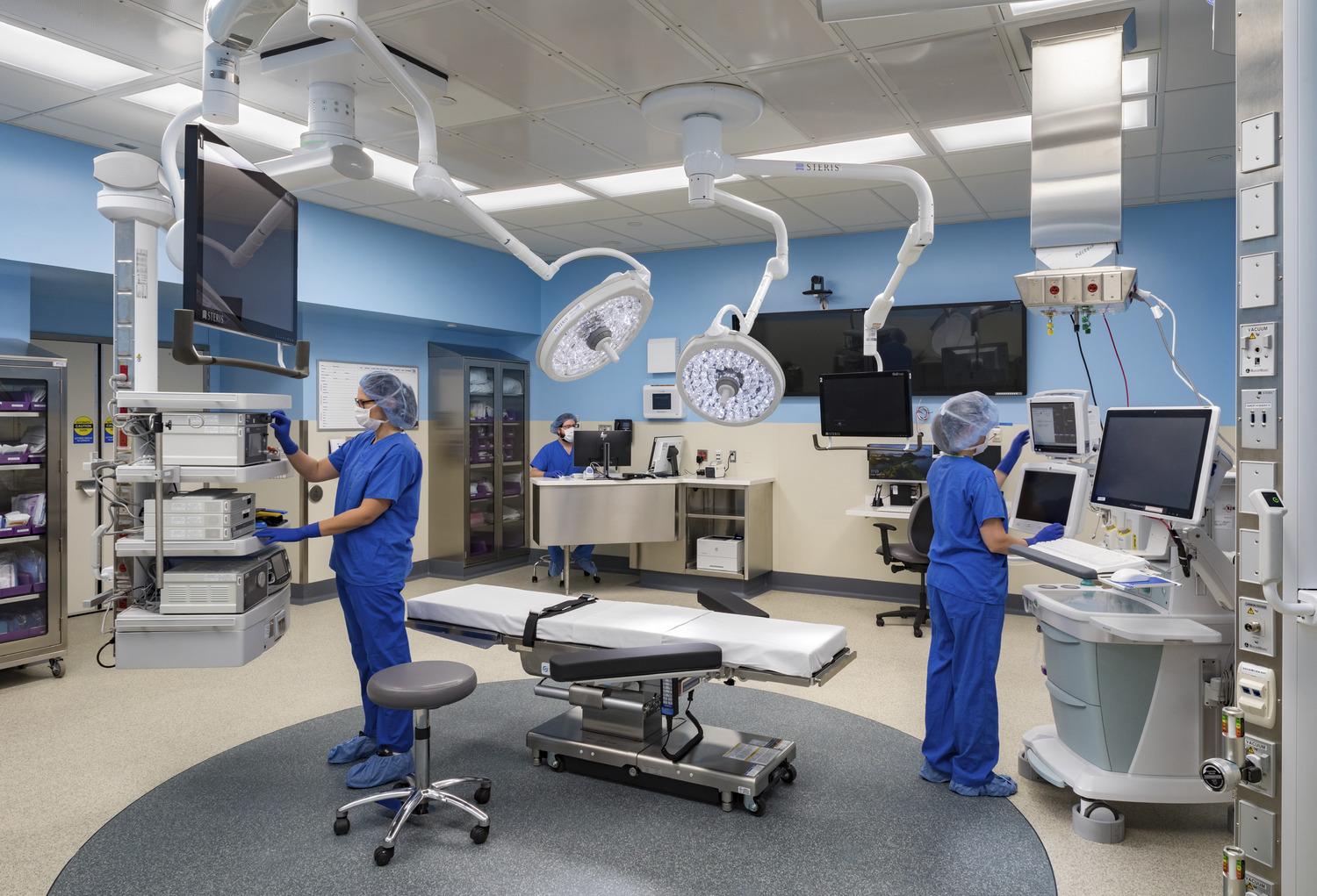
IMEG provides mock-up labs to serve as real-world testing environments where design, workflow, and technology converge. Such a setting, along with powerful augmented and virtual reality experiences, allow owners and care teams to experience new systems before they are deployed, revealing where solutions feel intuitive, where they introduce friction, and enabling them to tell us how they can be improved. Nurse call integrations, digital whiteboards, RTLS, lighting controls, device placement, and acoustics all can be evaluated through the lens of human behavior, not just technical capability.
This helps prevent the common pitfall of implementing technology that adds complexity instead of relieving it. This thoughtful design reduces cognitive load, supports burnout prevention, and ensures that technology enhances rather than interrupts the flow of care. Such strategic technology planning also helps:
- Mitigate workforce shortages, contain costs, and safely modernize by strengthening infrastructure, improving communication, and aligning solutions with clinical realities. The best systems anticipate needs and simplify tasks, fostering safer, more connected care environments without sacrificing the human element that defines healing.
- Make care more accessible. As automation, artificial intelligence, and predictive analytics become more common, a central question emerges: Will technology bring us closer together or push us further apart? The answer depends on thoughtful implementation. For boomers managing chronic conditions, for younger families seeking efficiency, and for clinicians balancing heavy workloads, technology must make care more accessible, not more isolating.
Looking ahead
Over the next five to 10 years, health systems will need to serve an older population that expects care to be personalized, efficient, and connected. Healthcare owners also will need to meet the expectations of younger patients and a multi-generational workforce with varied levels of digital comfort. Remote monitoring, home-based hospital models, and AI-driven insights will expand, but their success hinges on systems that are intuitive enough for all who use them.
Whether building the digital backbone of a hospital, integrating clinical systems, or planning environments that support dignity in aging, the guiding principle remains unchanged: Keep people and their experiences at the center, and build technology that grows with them.
Roberta Romeo, MSBAPM, is a senior clinical healthcare information technology advisor at IMEG. Contact her at bert.a.romeo@imegcorp.com.