
Structural parametric engineering expedites downtown high-rise projects
By Stephen Urias
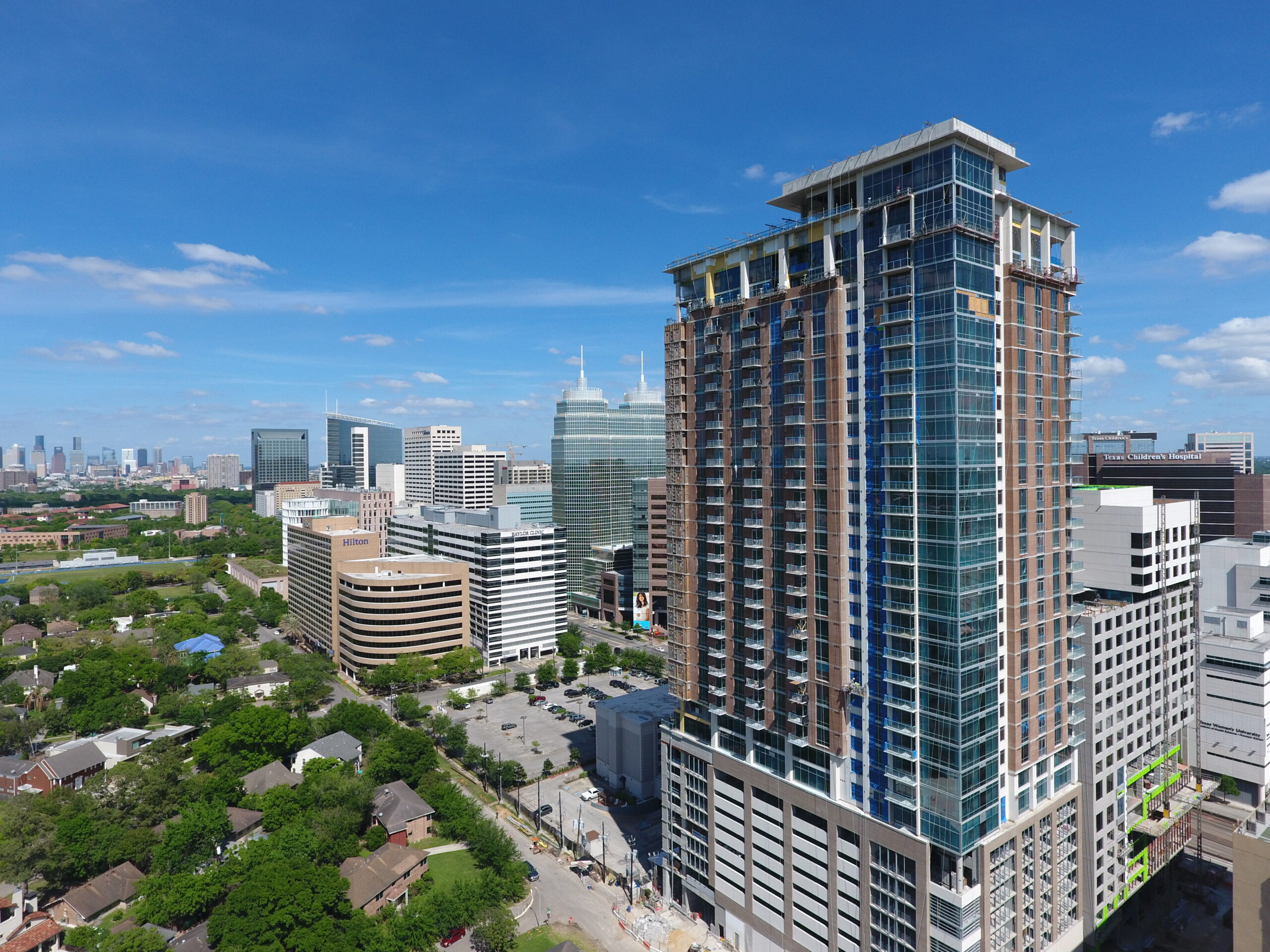
Most central downtown districts in the U.S. are fully built out, requiring new development within these dense environments to maximize value from every square foot—often with a high-rise structure due to size limitations of available footprints.
Vertical construction often introduces constraints, however. Determining the optimal building height, footprint, and program mix—while understanding the structural implications—is a balancing act that must occur early in the project to achieve the most efficient and economic outcome. To achieve this with confidence, the project team must be able to rapidly evaluate viable building configurations long before detailed design begins. During this stage, owners and architects may explore up to 10 or more design scenarios. Each iteration raises critical structural questions, with the structural engineer providing answers to questions that will influence every downstream decision, including:
- Where are the columns located, and how large must they be?
- What lateral system is appropriate for the building height and geometry?
- Which floor systems best support the architectural program?
- How much rentable or usable area is consumed by structural elements?
Providing informed, rapid responses to these questions is essential. Enter parametric engineering.
Flexible and rapid modeling
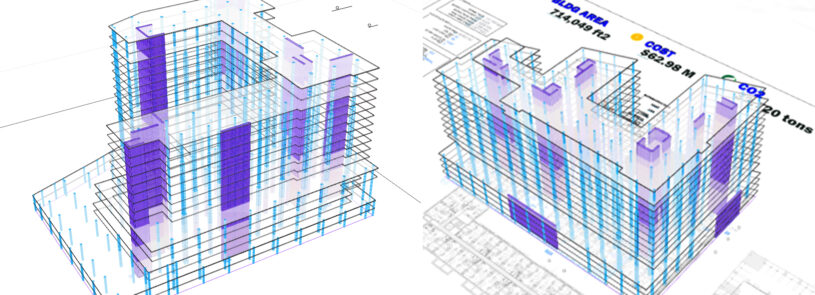
Parametric engineering helps engineers rapidly design multiple design iterations, creating flexible and intelligent models that respond instantly to changes in parameters as opposed to building a model using fixed dimensions. Leveraging AI-driven software, IMEG developed its own parametric tool to use during the critical early stages of structural projects. For a recent high-rise project within a dense, urban core, our parametric modeling team fed the building geometry into the tool and quickly evaluated multiple site and massing scenarios. This allowed the structural strategy to remain flexible and responsive as architectural and programmatic decisions were tested in real time.
Through parametric modeling, we were able to:
- Adjust and increase shear wall cores to accommodate elevators and meet lateral demands
- Relocate columns to support ideal program layouts and improve planning efficiency
- Refine exterior column locations to allow for balconies while maintaining egress requirements
- Rapidly adapt structural systems to meet drift criteria and preliminary member sizing
- Generate early structural performance data to support wind tunnel analysis
- See real-time cost and carbon impacts of each iteration
Early access to building response data proved invaluable, especially in evaluating wind behavior and eliminating potential adverse wind shedding effects before designs became fixed. The models allowed changes to be made in minutes rather than days or weeks, giving the design team and owner immediate feedback on the structural implications of each scenario.
This proactive insight reduced risk, improved coordination with specialty consultants, and gave the owner confidence that the selected concept is buildable and financially sound.
By embedding parametric structural modeling into the feasibility phase, uncertainty is removed from decision-making—allowing urban core projects to move forward with clarity, agility, and confidence in an increasingly complex development environment.
Watch a high-rise parametric video and learn more about IMEG’s parametric capabilities.
Stephen Urias, PE, is a senior structural project manager at IMEG.