

Campus Optimization
The project: IMEG performed retro commissioning services for multiple existing buildings at Creighton University and commissioning all new systems.
The goal: To ensure building systems were working properly and safely, reduce maintenance issues, and reduce operational costs while enhancing the working and living environments of students and staff, and promoting sustainable energy efforts.
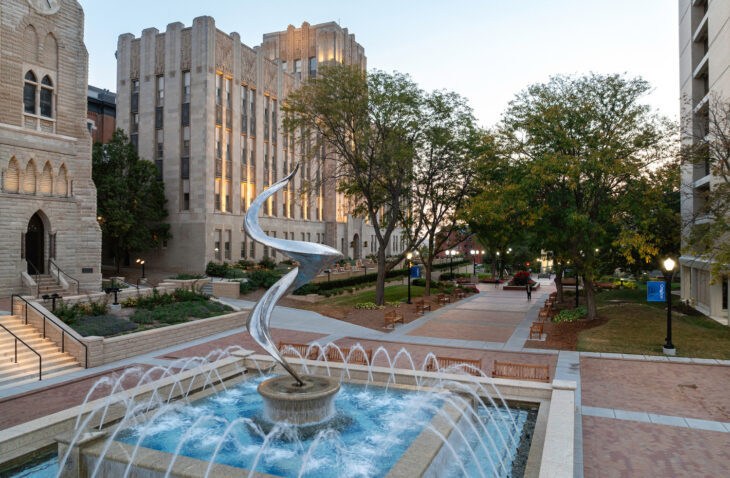
Project approach: IMEG developed mechanical and systems controls standards to be used campus-wide. Our team worked closely with Creighton University to optimize campus-wide energy performance across a diverse range of buildings, including student housing, classrooms, offices, medical and research labs, and a cathedral. Given the varying types, ages, and conditions of the utility systems, IMEG tailored its approach to ensure efficiency improvements were maximized for each facility.
As part of the project, IMEG developed a real-time energy monitoring dashboard. This system provides university stakeholders with immediate insight into energy consumption at the building and campus levels. Fully implemented, the dashboard allows students, faculty, and staff to track their energy usage in real-time, compare it against conservation and sustainability goals, and witness the direct impact of their efforts. Additionally, the dashboard enables the university to identify high-energy-use buildings and implement strategies for more effective energy management.
Additionally, recognizing that most of the building spaces on the university’s campus were being conditioned throughout the day, even when unoccupied, our team suggested conditioning rooms and spaces only when occupied, ultimately conserving energy. In accordance with project objectives, IMEG developed custom software to integrate the University’s campus-wide room scheduling utility, 25Live, into the University’s campus-wide BAS. The BAS now recognizes when a room is scheduled for use anywhere on campus and automatically adjusts HVAC settings in the rooms for occupancy in accordance with schedule parameters. Conversely, HVAC systems now operate in unoccupied mode when not in use, saving considerable energy. A review of the project showed that many rooms now operate in occupied mode less than 10-hours per week, where they were previously operating in occupied mode more than 60-hours per week.
Project outcome: The initial phase of optimization is saving Creighton University more than $1.5 million in operating costs annually, with future energy savings to be expected from the optimization of additional buildings.