

New Health Sciences Education Building
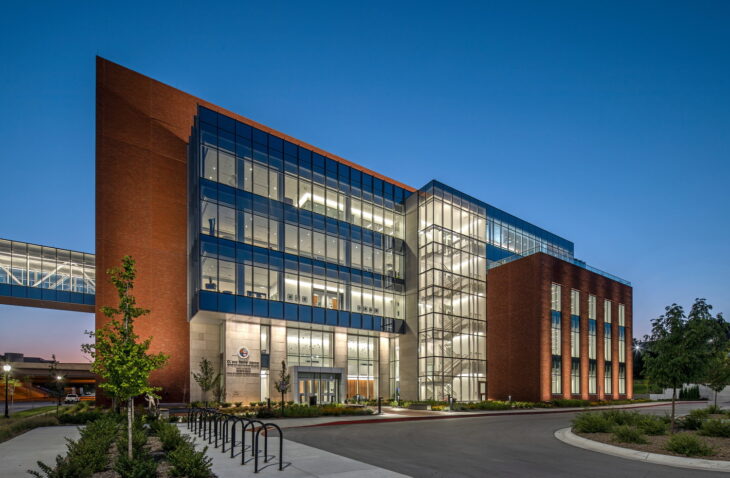
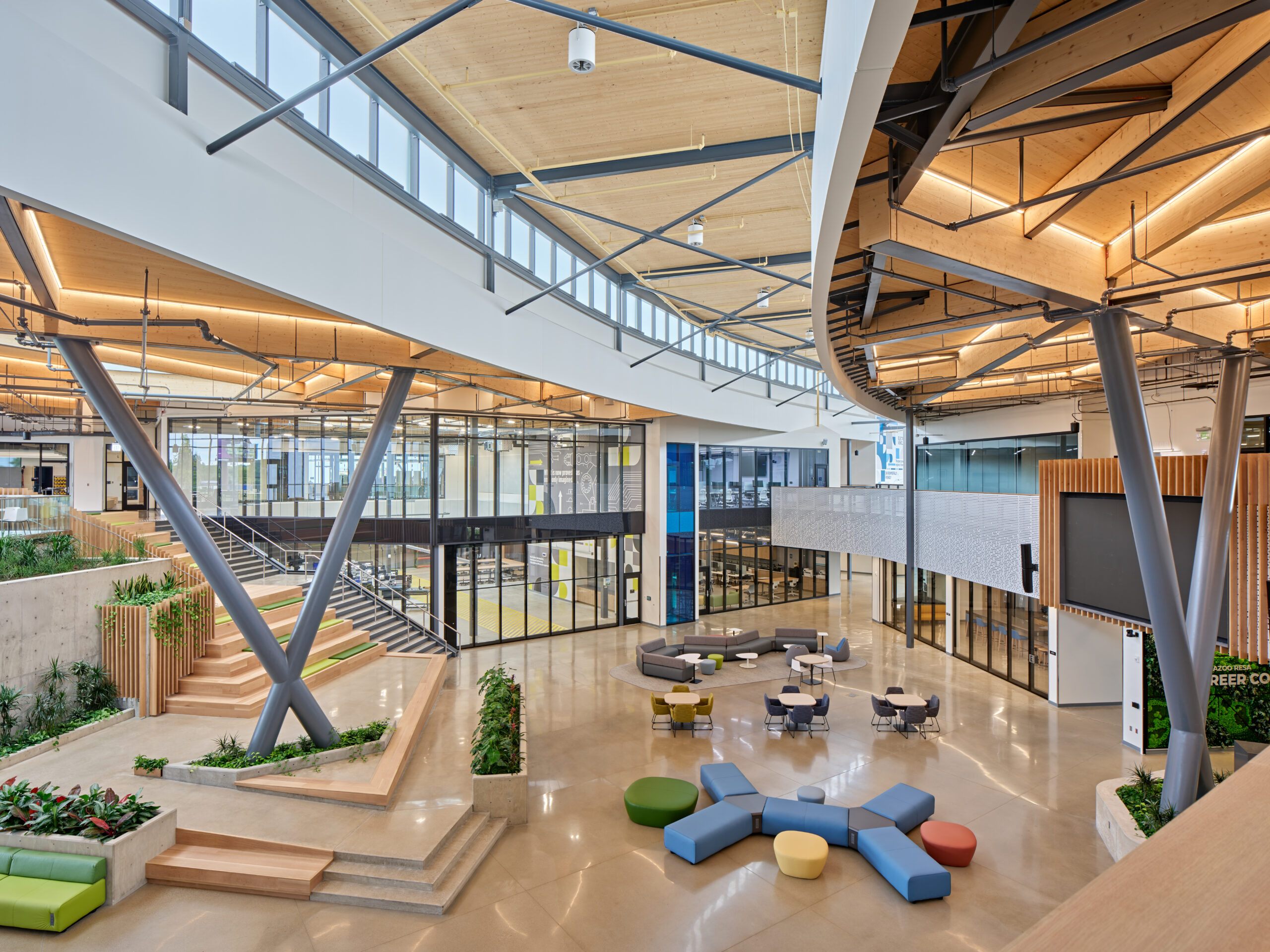
The project: Creighton University’s CL and Rachel Werner Center for Health Sciences Education is a 145,000-sf, five-story facility designed to foster interdisciplinary education among a wide range of healthcare disciplines.
The goal: The center was created to provide a collaborative learning environment for future physicians, nurses, occupational therapists, physical therapists, pharmacists, physician assistants, and paramedicine (EMS) technicians to learn and work under one roof.
The design: The building features a diverse array of science research and simulation laboratories, specifically tailored to support modern, interactive, and experiential learning methods. This includes debrief rooms, social spaces, and a 90-seat classroom on the first floor. The second floor includes rehabilitation science research labs equipped for work with paraplegic and quadriplegic patients, a home care lab designed like an apartment for real-life caregiving simulations, an acute care lab for hands-on practice, and a virtual reality room that immerses students in diverse clinical scenarios.
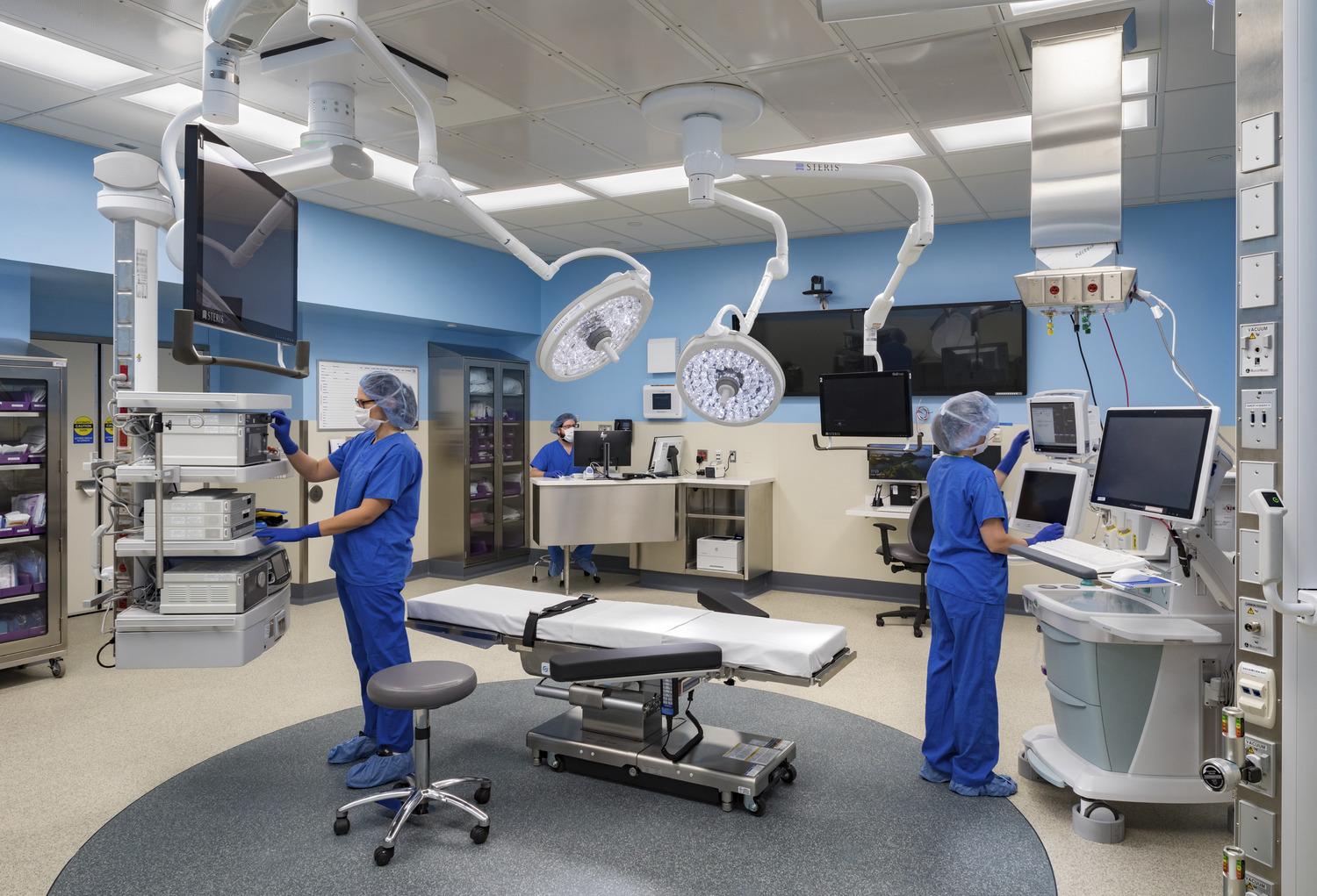
The third floor houses the William and Ruth Scott Family Foundation Simulation Center, which includes 10 high-fidelity simulation rooms and an operating room suite replicating various hospital environments like obstetrics, trauma, surgery, and hospice. Instructors control scenarios from a nearby control room. This floor also includes the David Vesely Task Training Lab for low-fidelity skills practice and 14 high-fidelity patient exam rooms where students work with standardized patients.
Mechanical systems: The building utilizes an expansive single-duct VAV reheat mechanical system to support the learning labs and learning spaces, which is controlled by a Schneider Building Management System.
Performance Commissioning: For this project, IMEG served as the Commissioning Authority, applying the performance-based commissioning approach. This role ensured that all building systems were designed, installed, and commissioned through comprehensive physical and functional testing to validate full operational integration, maximizing efficiency and performance beyond Creighton University’s operational criteria.
The outcome: The successful commissioning of the Werner Center ensured that all building systems operate efficiently, reliably, and in alignment with Creighton University’s programmatic and operational goals. As a result, faculty and students benefit from optimal indoor comfort, healthy air quality, and highly responsive building controls that support a wide range of educational and simulation activities. The verified system performance not only enhances day-to-day teaching, learning, and research but also contributes to long-term energy efficiency, reduced maintenance issues, and a more resilient building infrastructure. This has allowed the University to fully realize its vision for a collaborative, state-of-the-art health sciences education facility from the moment it opened.
Photo by Michael Robinson / @mrobinsonphoto