
Honoring service through engineering: IMEG’s work with national cemeteries
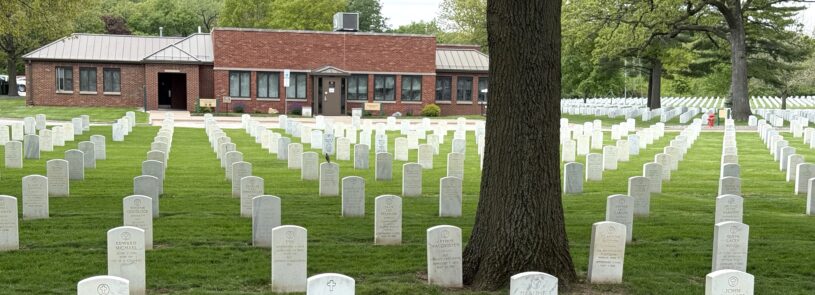
| A sample of IMEG projects |
National Memorial Cemetery of the Pacific (The Punchbowl) | Honolulu, Hawaii | 116 acres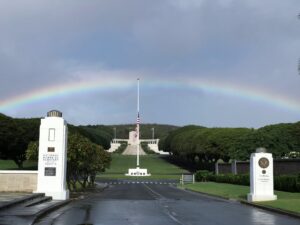
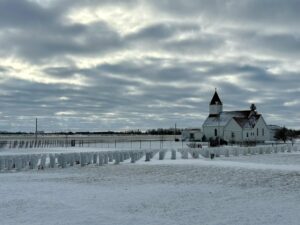
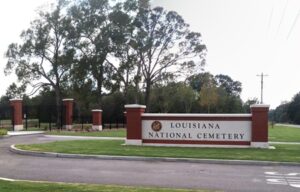
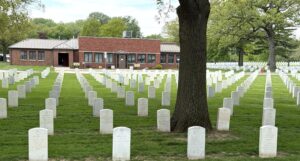
Located in an extinct volcano in Honolulu, the national cemetery had its first interment in 1949. IMEG provided structural, mechanical, electrical, plumbing, and technology engineering design services for three projects between 2020 and 2023 that included gravesite expansion, a new restroom building, road, curb, and overlook replacement, and a utility line replacement. Fargo National Cemetery | Harwood, North Dakota | 34 acres The first national cemetery in North Dakota and the second created under a rural initiative to provide VA burial access to veterans who lived far from VA national cemeteries or VA grant-funded state veterans cemeteries. IMEG provided electrical engineering design and construction administration when the cemetery was created, and structural, electrical, and technology engineering for the later addition of restrooms, a storage structure, and wind walls for the committal shelter. Louisiana National Cemetery | Zachary, Louisiana | 103.8 acres The Louisiana National Cemetery is an expansion of the Port Hudson National Cemetery, a Civil War-era national cemetery, which closed in 2012. IMEG provided structural, mechanical, electrical, plumbing, and technology engineering and construction administration for a new administration and restroom building project that began in 2017. Rock Island National Cemetery | Arsenal Island, Rock Island, Illinois | 66.8 acres The Rock Island National Cemetery was established in 1863 to serve Union soldiers who served as guards at a Confederate prison camp on the Arsenal, as well as the prisons of war who died there. IMEG provided surveying for a 2024 columbarium project, and electrical, structural, and HVAC engineering design and construction administration for the addition of a maintenance building, committal shelter, and restroom facility in 2008. In 2026, IMEG returned to the cemetery for a new phase of work involving the renovation and expansion of the existing Administration and Maintenance Building, reinforcing the facility’s ability to serve staff, visitors, and ongoing operations. |
By Matt Snyder
Each year on Memorial Day, we pause to reflect on the service and sacrifice of our nation’s veterans. For those of us at IMEG who have spent years working with the National Cemetery Administration (NCA), that reflection is not confined to a single day; it is embedded in the work we do every day.
IMEG has partnered with the NCA, a division of the U.S. Department of Veterans Affairs, for nearly two decades. What began as a single project in Oregon has evolved into a long-standing role delivering full structural, mechanical, electrical, plumbing, and technology engineering services, along with select civil surveying, for national cemetery projects across the country. Today, we support projects nationwide through regional Indefinite Delivery/Indefinite Quantity (IDIQ) contracts, collaborating closely with veteran-owned design partners—a structure that underscores the mission-driven nature of this work.
National cemeteries vary significantly in scale and complexity. The most well-known is the Arlington National Cemetery, Virginia, a 639-acre site that hosts an average of 27 to 30 funerals each weekday. While IMEG has not had the privilege of working at Arlington, we have worked at more than 70 locations, ranging from the 116-acre National Cemetery of the Pacific in Honolulu, built in an extinct volcano, to the 34-acre Fargo National Cemetery in North Dakota, a modest rural site that began as undeveloped land. Each one is an active, operational environment that requires resilient, reliable infrastructure that must meet the rigorous standards set by the NCA.
Even the smallest sites include essential infrastructure such as entrance lighting, irrigation pump houses, restroom facilities, and gravesite locator systems to help families find their loved ones. At larger cemeteries, the built environment becomes far more complex. These sites generally include administration buildings, maintenance facilities, vehicle storage, material storage, and Public Information Centers—spaces designed to support both operations and the public experience. These buildings are not incidental; they are carefully designed to reflect the dignity and permanence appropriate to their purpose.
Our role extends beyond traditional engineering design. We contribute to master planning and infrastructure assessments across dozens of cemeteries. We also serve as a trusted advisor to the NCA, performing peer reviews of other consultants’ work. This responsibility reflects a high level of trust and requires both technical rigor and professional judgment.
To perform that level of work over two decades is a testament to our expertise. The NCA maintains standards that go beyond typical VA requirements, and maintaining in-house knowledge of those standards is critical. Second is geographic adaptability. Our teams routinely deliver projects in states where we may not have a local presence, but we still must have a strong command of local codes, climates, and conditions. Third is our ability to navigate complex federal requirements, including Buy America, Build America provisions and heightened security standards. On the technology side in particular, NCA projects demand advanced and comprehensive security systems.
Another defining aspect of this work is the expectation that facilities are continually brought up to current standards. Unlike many projects where existing systems may remain untouched if functional, NCA projects require a forward-looking approach—evaluating and modernizing infrastructure to meet today’s criteria every time improvements are made.
Ultimately, what sets this work apart is not just technical complexity; it is purpose. These are places of remembrance, reflection, and national significance. Every system we design, every detail we coordinate, contributes to an environment that honors those who have served.
Being part of that mission is a responsibility and a privilege.