


The autonomous factory is coming. Is your facility ready?
By Mike Walsh
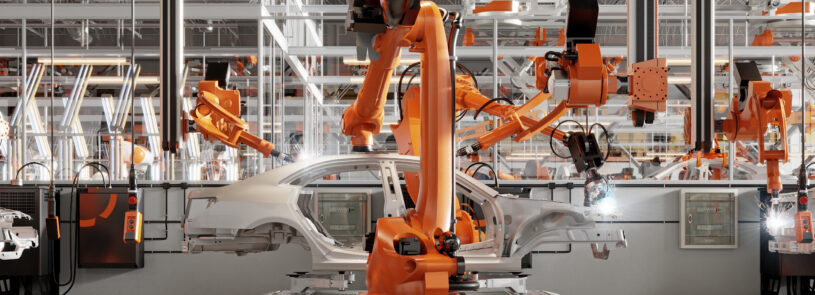
Digital twins and artificial intelligence are helping manufacturers understand what is happening on the factory floor—and predict what may happen next. The next step could be more significant: factories capable of making some decisions for themselves.
One technology that could accelerate the move toward increasingly autonomous operations is agentic AI—artificial intelligence capable of pursuing goals, making decisions, and initiating actions within defined parameters. In its 2026 roadmap for artificial intelligence and machine learning in smart manufacturing, the National Institute of Standards and Technology (NIST) identifies autonomous systems, advanced sensing, robotics and digital twins among the areas where AI is advancing manufacturing.
Manufacturers first need to make sure their facilities are ready for this next generation of technology, however.
Intelligence becoming infrastructure
Today’s automation generally follows predetermined logic: If this happens, do that. But imagine a production environment where a digital twin identifies deteriorating equipment performance and an AI agent evaluates production requirements, maintenance history, and available capacity. The agent then adjusts the operating sequence, schedules maintenance, and communicates the change to other systems, with human oversight occurring where required.
Some elements of that scenario already exist. Others are still emerging. But as intelligence becomes more critical to production, the infrastructure supporting that intelligence becomes mission critical as well. Computing capacity needs power. Computing equipment generates heat. Sensors and machines require connectivity. Real-time applications require reliable, low-latency communication. Critical systems may require redundant power and network pathways.
Simply providing spare capacity may not be enough if we are providing spare capacity for yesterday’s technology.
Manufacturers therefore need to understand where future computing will occur (in the cloud, at the edge of the network, or directly on the factory floor) and whether their facilities have the power, cooling, space, and connectivity to support it.
Convergence of IT and OT
Autonomous operations also accelerate another change already occurring in manufacturing: the convergence of information technology (IT) and operational technology (OT).
Historically, business networks and production systems could operate relatively independently. Smart manufacturing, however, increasingly depends on information moving between machines, controls, sensors, building systems, enterprise software, digital twins, and cloud platforms.
While connecting IT and OT systems can increase productivity and enable new capabilities, the NIST has warned that greater connectivity also creates additional cybersecurity vulnerabilities in industrial control environments. This makes cybersecurity more than a software consideration.
The physical and logical architecture of a facility’s technology infrastructure can either support or undermine its cybersecurity strategy.
Every new connection can create value, but it can also create a pathway that needs to be understood and protected. Network segmentation, fiber and cable pathways, wireless infrastructure, equipment locations, remote access, physical security, and connections between IT and OT systems all need to be considered as part of the overall technology and cybersecurity strategy.
Design for adaptability
No one knows exactly what the autonomous factory of the next decade will look like. Manufacturers should not try to design facilities around one AI platform or today’s computing technology. Instead, the goals should be adaptability, flexibility, and resiliency in critical areas:
- Electrical capacity and power quality
- Network architecture
- Fiber pathways
- Wireless coverage
- Space and cooling for edge computing
- Cybersecurity segmentation
- Physical security
- Controls integration
Just as importantly, facility, process, controls, IT, OT and cybersecurity stakeholders need to be involved earlier in the design process. Decisions made independently in each discipline become much harder, and more expensive, to reconcile after a facility is built.
Manufacturers don’t need to know exactly what their autonomous operations will look like 10 years from now, but they do need to avoid making infrastructure decisions today that limit what becomes possible tomorrow.
The best time to ask whether a facility is ready for AI isn’t when the first AI application is installed. It’s when the power cooling network, controls, and technology infrastructure are still being designed.