



Podcast | HCD10 Industry MVP places clients into extended reality to fully experience design

This episode of The Future Built Smarter podcast examines the use of extended reality in the AEC industry through the eyes of Abby Coleman, winner of Healthcare Design magazine’s HCD10 Industry MVP Award.
As IMEG’s extended reality specialist, Abby (pictured above at far right) has spent the last four years creating immersive experiences people can step into. Her role, she says, is to help “engineers and, most importantly, clients use augmented and virtual reality to thoroughly understand a proposed design.” To date she has facilitated or supported more than 5,000 such experiences for IMEG project stakeholders.
Abby frames extended reality, or XR, as a way of moving design conversations out of flat, two-dimensional drawings and into a space where stakeholders can react instinctively. Once participants get into a headset, she says, “you can just hear the ‘oohs’ and ‘ahs’—like, ‘Oh, wow, I can really see the benefit of using this technology for design.” Such experiences, she says, provide participants with a thorough understanding and visualization of spaces as designed. “It really helps them make better, more informed, and confident decisions before anything gets built.”
Abby categories XR experiences into three levels, depending on the audience and the project. “Level one would probably be just using augmented reality on your mobile device,” she says, describing use cases such as jobsite visits and groundbreaking ceremonies. Level two is “using our VR software on PCs to really just visualize it on a screen.” Level three, the most immersive, would be “stepping into” and “looking around” a space using a VR headset, with designers being able to move elements in real time based on the suggestions of the viewers, e.g., healthcare clinicians.
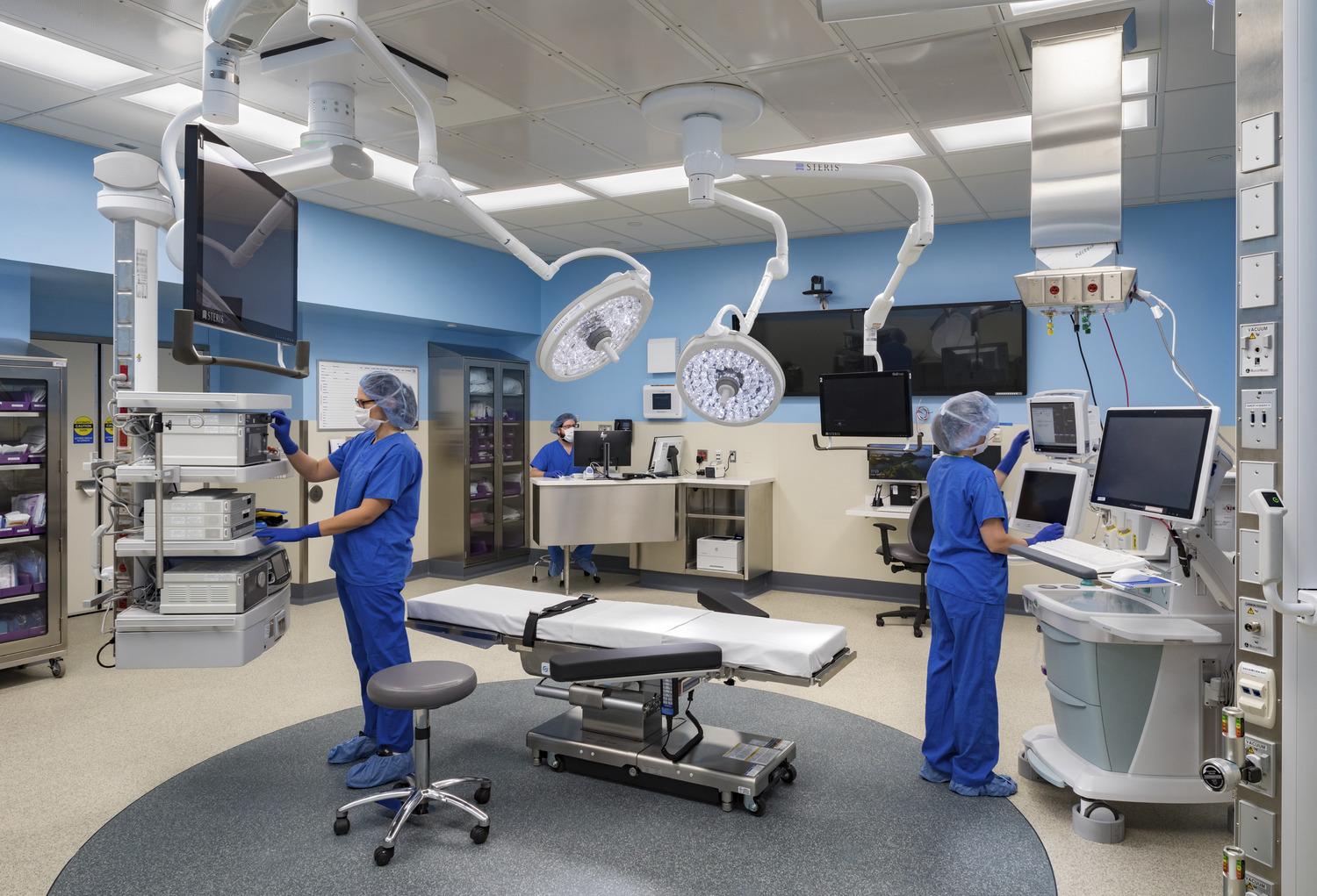
“Once folks are in that immersive level three experience, we definitely do have the capability to move our live Revit elements,” Abby says. A Mayo Clinic XR experience, for example, used immersive VR to show multiple boom layouts and check clearances and usability—based on the clinicians’ feedback—before construction began. In another XR experience, IMEG led a VR workshop for more than 50 Henry Ford Health clinicians, putting them into a future smart patient room featuring the healthcare information technology suggested by the designers for the project.
In these and other instances, the ability to adjust design in real time helps stakeholders evaluate options in a more meaningful way than a marked-up plan ever could.
Looking ahead, Abby imagines a future in which XR becomes even more powerful as it incorporates artificial intelligence. Instead of making adjustments manually during XR design reviews teams will simply use voice prompts to ask AI to make changes in the model instantaneously. “I definitely think AI and XR are going to cross paths,” she says.
Watch IMEG extended reality experience videos of a patient room, conference room, job site visits, and a groundbreaking ceremony.
Listen to the podcast: