
Carson Hall Renovations
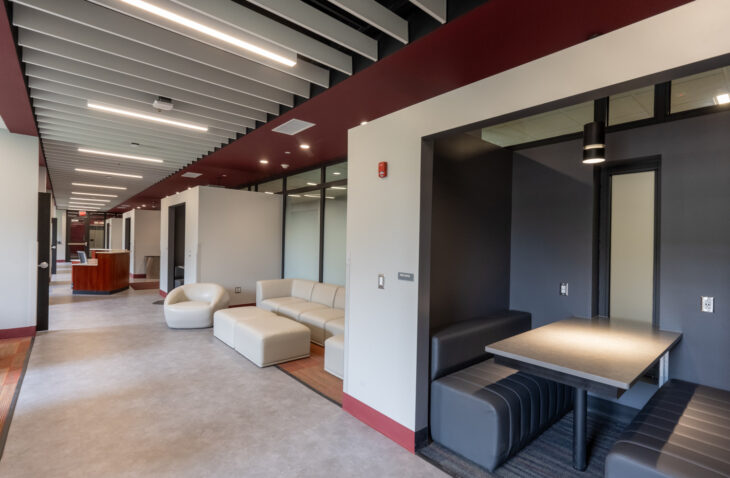
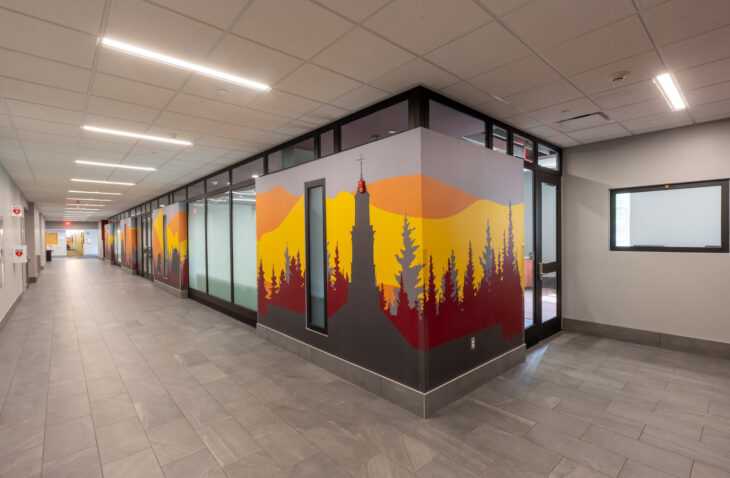
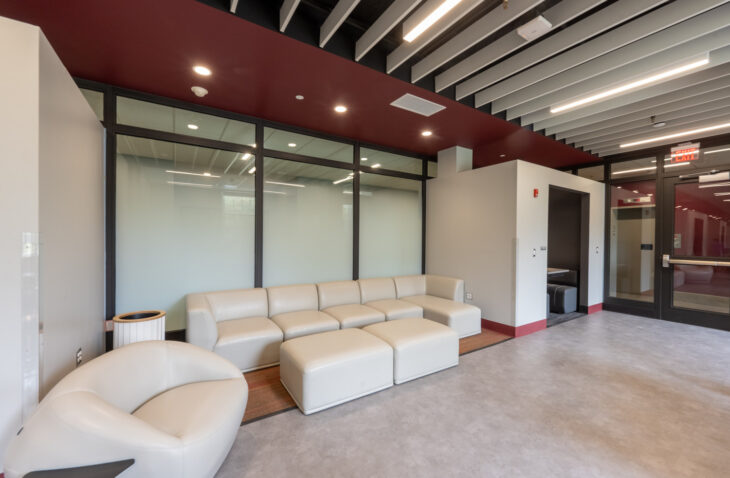
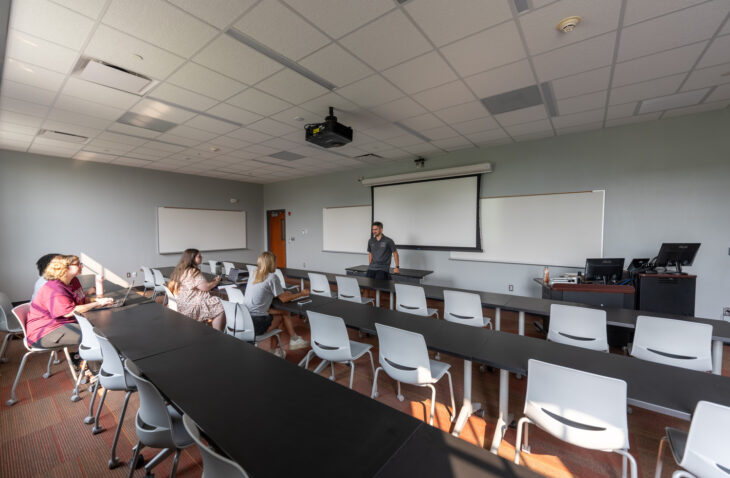
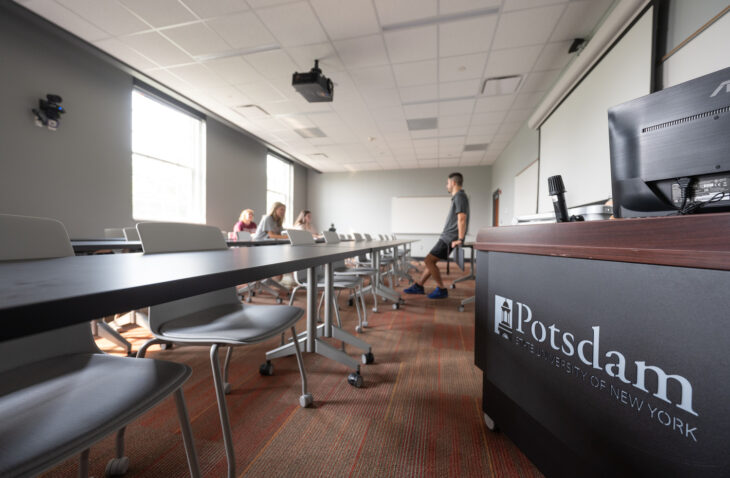
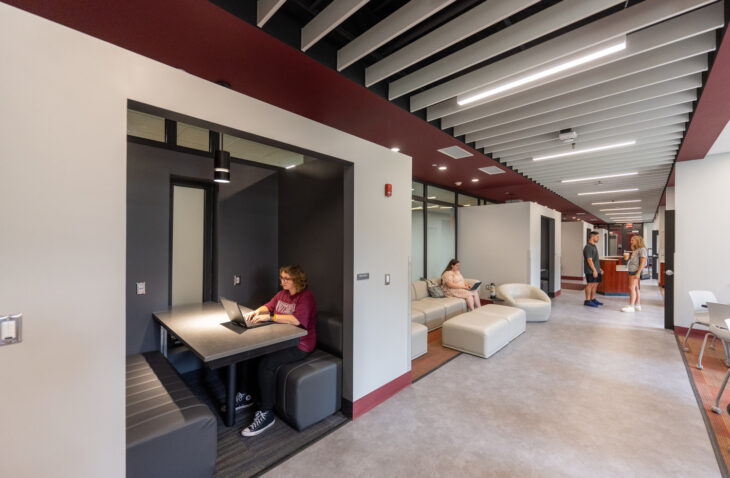
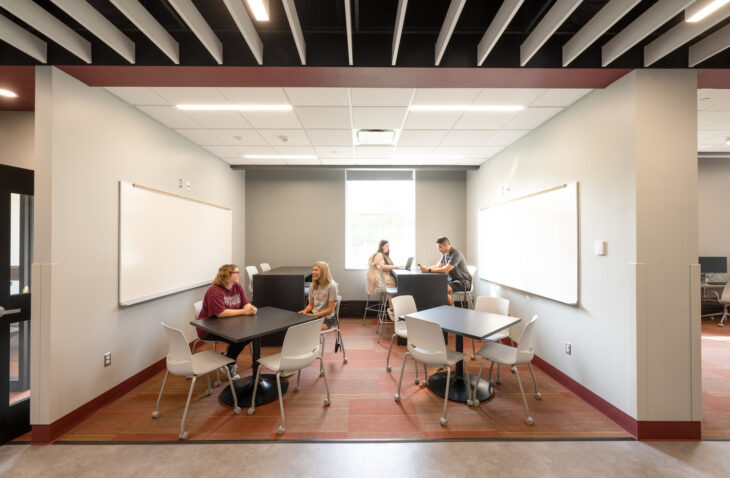
The project: SUNY Potsdam sought to transform Carson Hall into a more accessible, student-centered facility by modernizing aging infrastructure, improving building performance, and creating flexible spaces that support learning, collaboration, and campus engagement.
The goal: The owner’s goal of the project was to modernize Carson Hall and its connected facilities by improving accessibility, addressing life-safety and code compliance requirements, and upgrading aging building systems to support long-term campus operations and evolving academic needs.
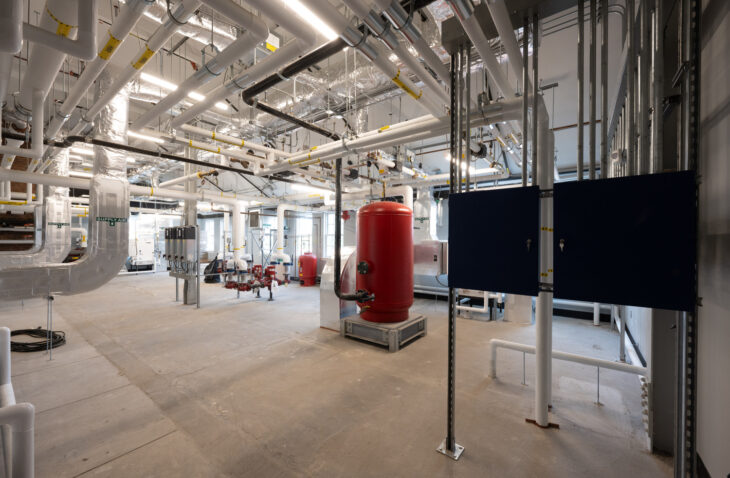
Design approach: IMEG developed a targeted renovation strategy that focused on high-impact improvements while preserving the character of the existing 1950s-era structures. Renovations included upgrades to academic spaces, circulation areas, and building infrastructure, along with the addition of new mechanical spaces. Two double-sided elevators were integrated within Carson Hall to provide ADA-compliant access between Carson, Morey, and MacVicar Halls, while a new code-compliant egress stair enhanced occupant safety. Mechanical, electrical, fire protection, and technology systems were modernized to improve building performance, reliability, and long-term maintainability.
Challenge: The renovation required integrating modern accessibility, life-safety, and building systems into a connected 1950s-era academic complex that was not designed to support contemporary code requirements or infrastructure demands.
Solution: IMEG strategically utilized existing building volume to accommodate new elevators, mechanical spaces, and a code-compliant egress stair while modernizing HVAC, electrical, fire protection, and technology systems. These improvements enhanced accessibility, safety, resiliency, and operational efficiency while preserving the character of the existing facility and positioning it for future campus needs.
Project outcome: The renovation transformed Carson Hall into a safer, more accessible, and future-ready academic facility. New accessibility features, upgraded life-safety systems, and modernized building infrastructure improved occupant comfort, operational reliability, and code compliance while extending the useful life of the interconnected campus buildings and supporting the university’s long-term facility goals.