
NAVFAC SE – Powertrain Complex Multi-Phase Development
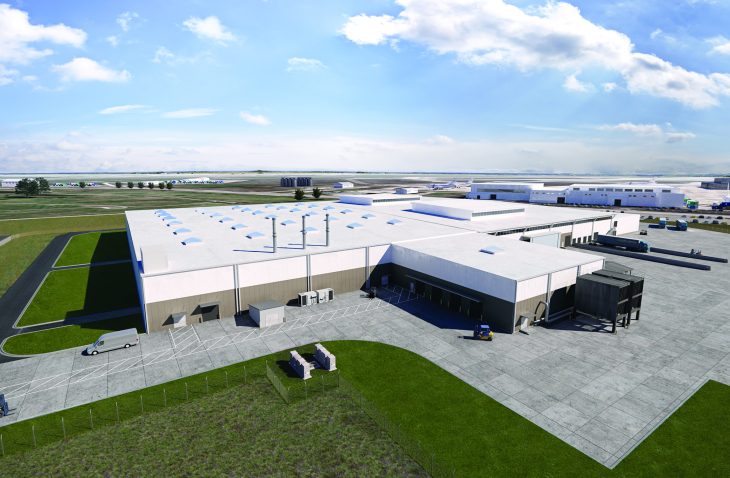
The project: IMEG provided structural, mechanical, electrical, plumbing, and communications engineering design services for Phases II, III, and IV of the new Powertrain complex at Corpus Christi Army Depot, the only depot-level aviation facility for repair and overhaul of rotary wing aircraft (helicopters) engines and components in Army Aviation. The complex includes the Powertrain Transmission Preassembly (PTPA) and a Central Energy Plant (CEP). As part of the ongoing refinement of the project requirements, the design team used the DD1391 review and edit process to develop a master plan for powertrain development phases I-VIII. The phased scope of construction was adjusted to meet the $85M project cost limit per phase. Omissions in the DD1391 were addressed throughout the design development phase to accommodate the scope within budget.
Phase II: Upon discovery of previously unidentified site contaminants at the 100% review phase, IMEG created 10 options for routing/configuration of new primary power service to address various stakeholders concerns and provided hazardous engineering services outside the scope of work.
The structural design supports 25-foot by 50-foot bays, with perimeter column spacing of 25 feet. The production facility was designed to support 1.5-ton overhead running cranes in the shop area.
The high-efficiency HVAC equipment complies with ASHRAE 90.1 and includes four-pipe, hydronic, variable air volume (VAV) air handling units (AHUs).
The central energy plant has two 1,000-ton chillers and two 2,500 MBH boilers with the capacity to add two additional 1,000-ton chillers and two additional 2,500 MBH boilers. This allows the facility to maintain N+1 redundancy as additional phases are constructed. The project includes an upgrade to the base electrical capacity to serve the current and future phases. This includes routing new 15kV feeders from the off base sub-station across the base to the main switch gear building serving the facility. This installation includes 6,000-lf of jack and bore burial of the feeders with manholes at 500 foot intervals. It also includes 300 feet of a utility tunnel under the Phase II building to transport the feeders to the switch gear building.
Distribution is via two new primary feeders routed underground. Two medium voltage feeders into the PTPA building serve two separate medium voltage unit substations. The design also includes distribution to the process equipment, a backup generator, interior LED lighting, emergency lighting, and a lightning protection system. Telecommunications service was extended through the fiber optic and copper cable, with a complete horizontal distribution system provided with data and voice provided at each outlet.
Phase III: This phase included the Machining Facility of the Aircraft Component Repair Shop (ACRS) and the first phase of a new Administrative Support Facility and related new infrastructure. The new ACRS facility is an addition to the Transmissions Subassembly Facility (Phase II). The ACRS includes open flex space to house component maintenance processes for repair and overhaul activities as well as space for support staff, administration, and daily activities. IMEG was responsible for the complete multi-discipline design of the ACRS, and communications systems design for the Administrative Support Facility.
The HVAC system includes single zone VAV and multi-zone VAV air handling units, dedicated outside air units with fixed plate heat exchanger systems, ductless split air conditioning units, a high efficiency water cooled chiller, cooling tower, and terminal units provided with hydronic heating coils served by a condensing gas boiler and hydronic heating pumps. The system exceeds the minimum requirement of 30% energy reduction of ASHRAE 90.1-2013.
An industrial waste system, compressed air, domestic water, water heaters, and air compressors were provided to support shop floor process equipment.
New electrical distribution equipment is fed from an existing medium voltage switch in the Phase II portion of the building. A new medium voltage switch serves two (2) new medium voltage substations for Phase 3 (ACRS) and provides a connection for future medium voltage feeders for Phase IV. Each individual functional area in the production area has a minimum 400A, 480V, 3 phase panelboard to serve the miscellaneous small 480V loads for the equipment. A new substation (12,470 – 480Y277 Volt) was added to the existing CEP to serve the new equipment, and the existing backup generator supplies life safety and optional standby loads. The electrical design also includes wiring, receptacles, power connections for equipment including overhead cranes and production equipment, interior and exterior LED lighting, and a lightning protection system.
Phase IV: B1700.4 is the fourth phase of the new Powertrain complex. The new ACRS Engines Assembly Shop will house the majority of repair and overhaul processes now housed in building 8, a central energy plant II, the second phase of a new administrative support facility, and related new infrastructure. The ACRS facility supports the production process and will be constructed adjacent and joined to the ACRS-Machining (Phase III, B1700.3). The building uses include helicopter assembly/disassembly, inspection, engine and component testing, welding, machining, cleaning, hydraulics, storage, and painting.
The additional central energy plant is to be constructed to house mechanical and electrical equipment. Central energy plant II (CEP II) is designed for all future expansions and is supported on shallow spread footing with a concrete slab-on-grade.
This building B1700.4 has structural steel columns supported on shallow strip and spread foundations and a reinforced concrete floor slab on grade. The lateral load-resisting system design for the building consists of structural steel braced and moment frames. The steel roof deck acts as a diaphragm. The framing system is designed in accordance with the American Institute of Steel Construction (AISC). The structure is designed to accommodate multiple 1.5-ton overhead running cranes, with a maximum of two cranes per 50-foot crane beam span.
Telecommunications rooms are provided on each side of the facility to serve the administrative areas. Cybersecurity measures are provided for the Utility Monitoring and Control System (UMCS), Fire Alarm Reporting Systems, and Electronic Security Systems (ESS), in accordance with UFC 4-010-06.
A life cycle cost analysis was conducted comparing three HVAC system alternatives. All new equipment is high efficiency, designed in compliance with ASHRAE 90.1 minimum efficiency requirements. The design includes four-pipe, hydronic, variable air volume (VAV) air handling units (AHUs). Single-zone VAV AHUs are used to condition the process floor areas and multi-zone VAV AHUs, incorporating individual zone VAV air terminal units. Air terminal units (ATU) are used to condition the support spaces. ATUs are pressure-independent, provided with hydronic heating coils, and all provided with factory-mounted electronic controls connected to the new building-wide DDC system to ensure interoperability between the new HVAC equipment and the base-wide HVAC controls integrator. The system exceeds the minimum requirement of 30% energy reduction of ASHRAE 90.1-2016.
The electrical design includes new medium voltage feeders, switchgear, substations, and connections to the new ACRS engines assembly shop. All exterior equipment is designed for use in a high-corrosion environment. Each individual functional area in the process floor area is provided with a minimum 400A, 480V, three-phase panelboard to serve the miscellaneous small 480V loads for the equipment. Power connections are provided for the new fire alarm/mass notification panel, communications equipment, security equipment, HVAC, and plumbing equipment. LED lighting fixtures are used throughout the building. A conventional lightning protection system will be provided for B1700.4, including strike termination devices, conductors, ground terminals, interconnecting conductors, surge suppression devices, and other connectors and fittings required for a complete and usable system.