

Defend against changing drone threats through security and design (Podcast included)
By Ryan Searles
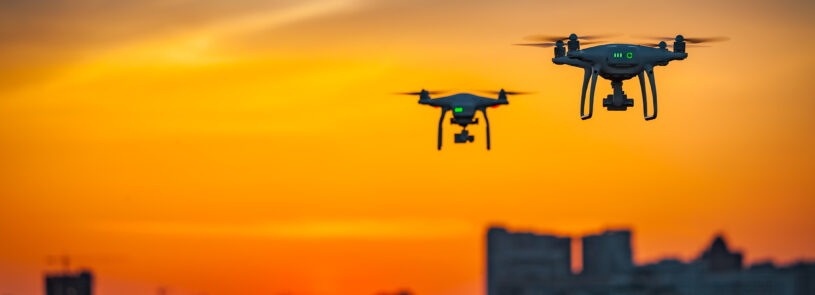
Unmanned Aerial Systems (UAS), commonly known as drones, are rapidly reshaping the security landscape. Once viewed primarily as recreational or commercial tools, drones now present evolving risks for critical infrastructure, healthcare facilities, campuses, and public venues. Their accessibility, low cost, and increasing sophistication make them an emerging threat vector that traditional security strategies were not designed to address.
For the AEC industry, this shift matters. Drone risk is not only a security operations issue — it is a design issue. If drone defense is considered only after a facility is built, many of the best opportunities to reduce exposure are already gone. The stronger approach begins early, with site planning, building design, and a layered security framework that anticipates aerial threats before they become operational problems.
The most effective defense is not a single device or tactic. It is a coordinated strategy that combines prevention, detection, mitigation, and response. Crime Prevention Through Environmental Design (CPTED) principles can help reduce vulnerability by improving visibility, controlling access, hardening the perimeter, and shaping the site to limit opportunities for exploitation. Design decisions such as buffer zones, clear sightlines, strategic landscaping, covered entryways, rooftop access control, and shielding sensitive areas can all contribute to a stronger posture without sacrificing functionality.
Technology has a key role as well. Detection tools such as radar systems, RF detection sensors, acoustic detection systems, drone identification software, and real-time tracking platforms can help security teams identify threats sooner and respond more effectively. When these tools are integrated with a Security Operations Center, incident response planning, staff training, drills, and coordination with first responders, they become part of a more complete and resilient security strategy.
At the same time, drone defense must operate within legal and regulatory boundaries. FAA regulations, local and federal laws, and limitations on counter-drone measures affect what can be deployed and how it can be used. That makes early collaboration essential. Architects, engineers, security consultants, and owners should work together from the beginning so drone mitigation can be incorporated into the project rather than added later as a retrofit.
The threat will continue to evolve. AI-enabled drones, swarm technology, and increased autonomy are likely to make aerial threats more capable and harder to detect. That is why proactive planning is so important. Facilities designed with security in mind — and supported by continuous monitoring and regular updates — will be better prepared for changing conditions.
Listen to the podcast: